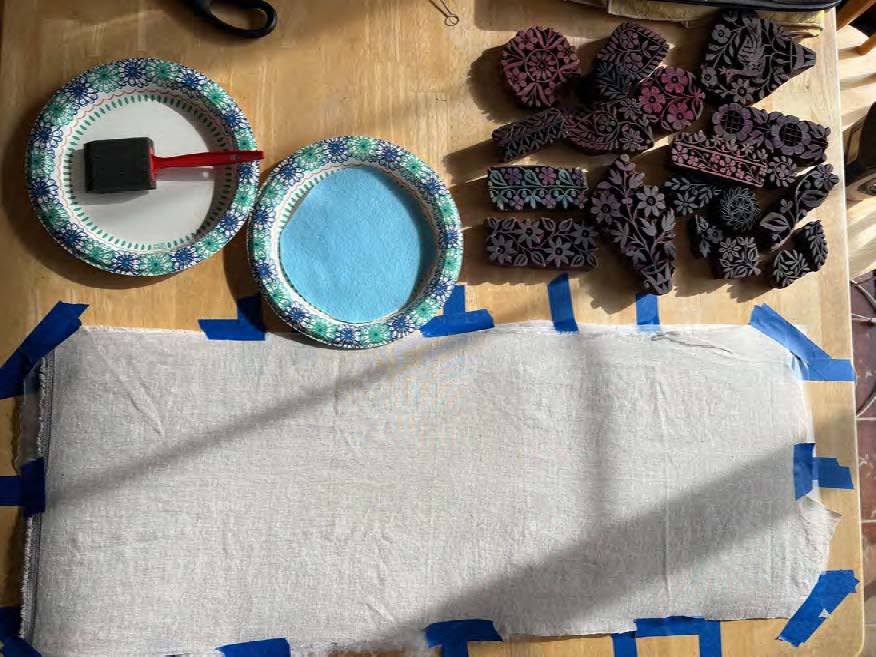
Family Heirlooms: Indian Woodblock Printing
Humanities Distinction Track final project by Apoorva Raikwar, M4
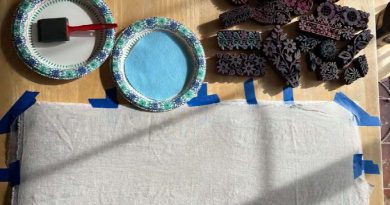
Humanities Distinction Track final project by Apoorva Raikwar, M4

This is a mixed media painting of Boromir from the Lord of the Rings series dying at the end of

This year, the University of Iowa Roy J. and Lucille A. Carver College of Medicine celebrated 150 years of excellence

About the Author Kristina Sevcik MD is a former medical student at the Carver College of Medicine. She is currently
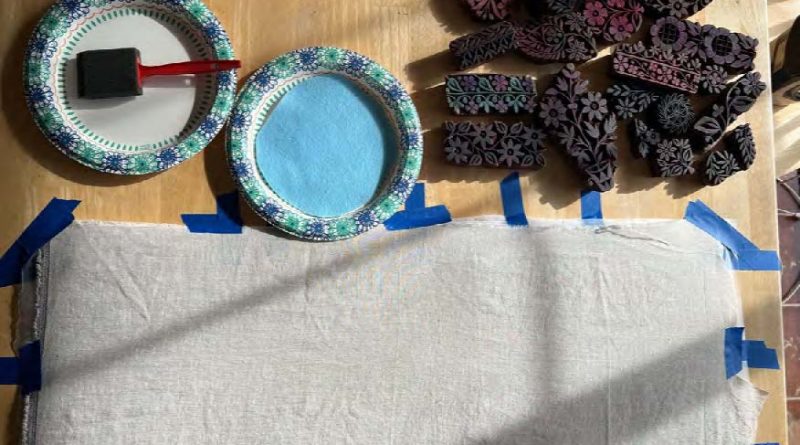
Humanities Distinction Track final project by Apoorva Raikwar, M4
Humanities Distinction Track final portfolio by Will Moody, M4
Humanities Distinction Track final project by Ethan Angle, M4
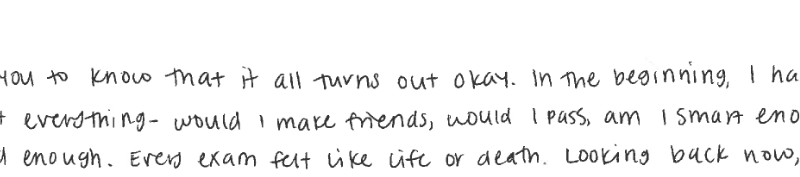

What would a graduating medical student want to tell students starting medical school? These letters written by M4s offer advice, encouragement, and cautions to the next class of med students.
What would an graduating medical student want to tell students starting medical school? These letters written by M4s offer advice, encouragement, and cautions to the next class of med students.
What is medicine?
The path is difficult but rewarding.
I go to work. Money bags.
Living through struggles. Not just surviving.
Tired eyes looked on with compassion.
If they forget you, good job.
The computer broke, yet patients survived.
Diagnosed with cancer, we cried together.
Helping heal the world, I hope.
Making a difference, whatever that means.
Push, stumble, fall, rise, fall, again.
Sometimes we do a little harm.
Humanism lost in the medical gaze.
Pathological anatomy doesn’t make a person.
The clinic is born; patient dies.
Relish in the highs and the lows.
Prolonging life while “doing no harm.”
To try, to fail, to learn.
The art of humanism and healing.
Medicine is an art of humanity.
You don’t know me. You trust.
Indications, normal values, cost of life.
She left so she could grow.
Bodies break. You pay. We fix.
Medicine is knowledge, recognition, and intervention.
Uneasy because of undue outside influence.
Medicine is teaching and healing patients.
What is my relationship to medicine?
Medicine is the art of healing.
Medicine can heal and hurt me.
Illness is a problem to solve.
Suffering is inevitable avoid causing it.
Medicine is helping people with life.
Medicine allows me to connect.
I don’t think you need this.
How do funny students become salty.
Art and silence of understanding illness.
Pervasive in my life and career.
Lessened curiosity, following rules, want stories.
Assigning categories to observations and feelings.
Guiding others closer to their “life”
An agent used for that betterment.
Comforting and protecting sickest individuals.
Establishing meaningful relationship while helping ill.

Kristina Sevcik MD is a former medical student at the Carver College of Medicine. She is currently a first-year pathology residency at the University of Nebraska Medical Center.

It’s okay to rip flowers out
and to set fire to vines,
to pluck petals off without
counting to love me
or love me not.
It’s okay to let fruit spoil
without giving it a chance
to taste sweet.
It’s okay to have weeds and bees
and birdbaths full of June bugs,
to plant watermelon seeds
that will never grow.
It’s okay to cut the heads off roses
and to water the bush that will never bloom.
It’s okay to dance
in a garden of goodbyes
to let go,
to make room.
Hannah Erlbacher is a medical student at the Carver College of Medicine. Her favorite medium is poetry.

This is a ritual.
I know that because this practice now transcends the routine and embodies life itself for me. I began this pilgrimage in a different life, but its continuation in this one sustains me. I approach these days with the sacredness of a priest, but I see no salvation in them like a non-believer.
Slowly, my eyes refocus on the surrounding room. It is dark in here, except, a faint luminosity trickles in from the nearby room that is separated from me by a pane of glass. The only other room that I know of which resembles this one has one way glass, and the police use it to interrogate suspects.
In a way, I guess that is why I am here too.
I begin to slide into a familiar cylindrical opening. I can see the words, “Do not stare directly into the laser aperture.”
I always think that aperture is too big of a word to use for such a small space.
But, I do not design these machines, in fact, I never want to see one ever again. Let them use a five-dollar word where a one-dollar word would do. It does not matter. Nothing really exists in here anyways. Suddenly, a light whirring noise cracks the façade of tranquility, and a rhythmic electronic beeping noise interjects itself between my thoughts. I settle into the paper lining beneath me, and I lie still, stiller than I have ever been, but not as still as I will ever be. Sometimes, I think that if I am quiet enough, I will be able to hear the radioactive tracer coursing through my veins, riding the superhighway of my blood vessels to the farthest reaches of my being. I know where the road ends. The tracer always coagulates into an unmistakable pattern before the radiologist’s eyes. It always shows cancer.
I used to arrive here brimming with the anxiety that inexactitude and uncertainty create, but not anymore. I have begun to enjoy, even relish, this ritual in my interrupted life. The more time that I spend in here, this coffin, this ark, the more I realize that this is the only place that I do not have cancer. I had cancer when I began to slide into this machine, and I may when I get out, but right now, until they see the scan, this precarious existence that I have temporarily carved out is a paradise of unpredictability. For the fifteen or twenty minutes that I am in here, I exist outside of five-year survival rates. I tower above the looks of pity that I receive soon after their eyes meet my smooth skull. I am not cured either, no, but while the machine works, I am at peace.
Afterwards, I sit waiting in an exam room while the radiologist maps out my existence. Absently, a half-paid attention to high school physics lesson floats into my mind. That day, my teacher told us to visualize a cat in a box. We were asked to imagine that there was a poisonous chemical in the box with the cat that had a fifty percent chance of killing it. The catch was, until someone opened the box, we could not know if the cat was alive or dead. Until that time, it was both. The lesson was designed to teach us something about quantum theory, but I never quite understood it. How could something be both alive and dead? As I sit in my chair, neither alive, nor dead, I understand perfectly well.
My doctor enters the room and stands before me holding the results of my scan in his hand like an ancient Roman emperor whose thumb hovers parallel to the ground before he decides if the gladiator should live or die.
He looks at the paper, pauses, and then looks up at me.
If formerly society was founded on a renunciation of enjoyment for the sake of social duty, then the only duty today consists in becoming oneself (to appropriate Todd McGowan). This piece posits that mental health discourse today only offers a new injunction for its subjects: to become self-identical, to self-actualize. We are increasingly told to “normalize talking about mental health”, but isn’t this declaration already anachronistic? Our mental health seems to be all that we can talk about, a new mode of narcissism only thinly veiled as somehow political, progressive, subversive. But if we have already absorbed the platitudes of liberal mental health discourse, then why is the mental health crisis worsening? The piece contends that it is in fact the presuppositions of mental health discourse that are the environment in which mental health issues form, that it is out of a dissatisfaction with an individual failure to achieve the imperatives foisted upon us by mental health discourse that mental health symptoms emerge. The solution is in fact the problem, and it is only when we challenge the notion of the individual undergirding mental health discourse that we can contend with the current mental health crisis, by positing an alternate model of the subject as relational, rather than as substantial entity, in which such a project of self-actualization becomes meaningless, and find meaning elsewhere (through collective emancipation).
Will Moody graduated from the University of Denver in June 2020 with a degree in molecular biology and plans to apply to medical school in June 2021. In May 2020, Will was diagnosed with Hodgkin Lymphoma and after undergoing treatment was informed his cancer had returned in November 2020. Writing has been a much needed creative outlet for him during this time. Will is currently working on his first book and spending time with his family while he continues treatment. His writing also appears in Pulse – Voices from the Hearts of Medicine, Aspiring Docs Diaries, and his blog, The Rest of Your Life.

I had just set up my post at the volunteer desk and was midway through the process of screening a visitor, asking, “Have you had any recent fevers, cough, …” when one of the hospice nurses, Nyah, quietly interrupted me. “Excuse me, would you be willing to go sit with 12?” “She isn’t doing well.” My heart raced, but I responded with an unwavering, “Yes, of course I can!” I walked briskly to the end of the corridor and found the patient’s room. I was greeted with a flashy, yellow sign, indicating a positive C. difficile infection, so I took appropriate precautions prior to entering her room.
Upon entering, a CNA met my gaze and knowingly passed on what seemed like everything I needed to know, without even saying a word. Her face told me the patient unfortunately did not have long. I pulled up a chair and tried to get to know more of who “12” was. Glimpsing up at her care team board, I saw a familiar scene: in faded dry erase marker, there were multiple family members’ names and their phone numbers scrawled all over. Some left messages, “Get well soon, Grandma!” and “We love you!” others drew little happy faces, stick-figure drawings of themselves, or sketches of dogs and hearts. I gave May’s hand a light squeeze with my gloved hand. The board also listed May’s recent medications, her husband’s name, and Lutheran, as her religious affiliation. May struggled to breathe, showing signs of a Cheyne-Stokes breathing pattern, but I asked her if she would like me to pray for her. She attempted to respond, but her labored breathing allowed her only a nod. For a brief second, May was able to hold eye contact, and in her eyes, I could see that she wanted relief.
Immediately, fear washed over me. What if my prayer wasn’t what May wanted to hear? How do I know what her specific requests are right now? I squeezed her hand again, before praying for peace and comfort for May. My prayer lifted, and again, I gave her hand a light squeeze. This time, May’s eyes were unable to focus on me, and I could tell she was steadily slipping towards death. I wondered deeply who May truly was and wished I had a time machine, bringing me back to the highlights of her years. A septuagenarian, I couldn’t help but think how she was affected by the pandemic in her final year of life. Without knowing May and the intricacies of her life leading up to this precious moment, it was impossible for me to know just how profound of an impact masks, gowns, face shields, and other measures of PPE had on her life. I wanted so desperately to remove my glove and provide skin-to-skin contact in her last moments. Instead, I offered a few more words of comfort and solace to May, and mostly just sat in silence with her, as her breathing drifted and her skin began to pale. Her limbs grew limp. A tear rolled down my cheek, burying itself in my mask.
Suddenly, the door opened, and in walked May’s husband, Gene, bewildered by May’s lifeless body. His partner of almost 50 years had only just passed, and he was in shock. He abruptly dropped his cane, which clanged off the ground with a stark metallic pitch that reverberated through my bones. Gene’s words faltered as he looked towards me, “I, … Who…?” And then stuttered, “Mmmay?” I didn’t respond, knowing that his thoughts would assemble in time. I excused myself to give Gene space to mourn, and later that evening, I was approached by Gene and May’s daughter. She introduced herself as Sharon, and then she asked me if she could hear about my last moments with her mom. Her puffy, swollen eyes, and long solemn face peered into my soul, as I provided details of the experience, praying, squeezing her hand, and trying to comfort May with my presence. May’s daughter beamed with gratitude and burst into tears, stating that her mother had been isolated for months leading up to her death, due to COVID-19 restrictions at the nursing home she was in. I could tell she wanted nothing more than to be with her mother and to be the one to hold her hand, but she managed to say, through a river of tears, “Thank you for being there for her. And praying with her– that was so kind of you.” When I met Sharon’s eyes to respond, an outpouring of tears fell down our cheeks, almost in unison, knowing that an act of mourning had just brought us closer.
Grief is a nearly palpable feeling felt deep within, and after May’s death, I carried her loss physically, mentally, and emotionally. The staggering death toll due to the novel coronavirus over the past few years is a constant reminder of grief. With every number that ticks across the television screen, there is likely someone, somewhere, grieving their loss. Shared mourning may assuage fears of some, reconciling to others, and aggravate opinions of a few. The process of remembering individuals who have died, either to direct or indirect factors related to the pandemic can bring healing. The connection May and I had in her final moments revealed that sitting close, hand in hand, did not require a familial relationship, only a bond that unites us all — as human beings. As continue to move toward the resolve of the COVID-19 global pandemic, a cloud of enduring grief hangs low, and we continue to mourn. May we draw upon our shared experiences, recall the power of presence, and surpass traditional boundaries to create new connections with one another.
The patient’s name and other details have been changed to protect patient privacy.
Mikayla Brockmeyer is a second-year osteopathic medical student at Des Moines University. She enjoys narrative medicine, reading for pleasure, and trying new ice cream flavors.